Janal Pixán: A Taste of Maya Tradition in Quintana Roo |
What the altars, family meals and “food for the souls” mean in Puerto Morelos and across the Yucatán Peninsula. |
Updated October 2026
For those living in or visiting Puerto Morelos, Día de los Muertos is a chance to see the town filled with color and remembrance. Here in Quintana Roo, it also has a deeply rooted Maya expression: Janal Pixán, also written Hanal Pixán.
This observance, often translated as “food for the souls,” centers on welcoming departed loved ones with offerings and a special meal. Understanding it adds another layer of meaning to the altars and celebrations you encounter around town.
What Does Janal Pixán Mean?
The name tells an important part of the story: janal means food, while pixán refers to the soul or spirit. According to the tradition, the souls of deceased relatives return to visit their families during this time.
Food is prepared and placed on an altar to welcome them home. After the souls are believed to have enjoyed its essence, relatives share the meal, bringing remembrance and family life together.
A Tradition With Maya Roots
Janal Pixán belongs to the cultural heritage of Maya communities across the Yucatán Peninsula, including Quintana Roo. Over generations, Maya beliefs about the dead have blended with Catholic observances introduced during the colonial period.
It is best understood as a regional expression of Mexico’s varied Day of the Dead traditions, rather than a completely separate holiday. Customs differ between communities and families, and the observance continues to evolve.
The Altar: A Welcome for Loved Ones
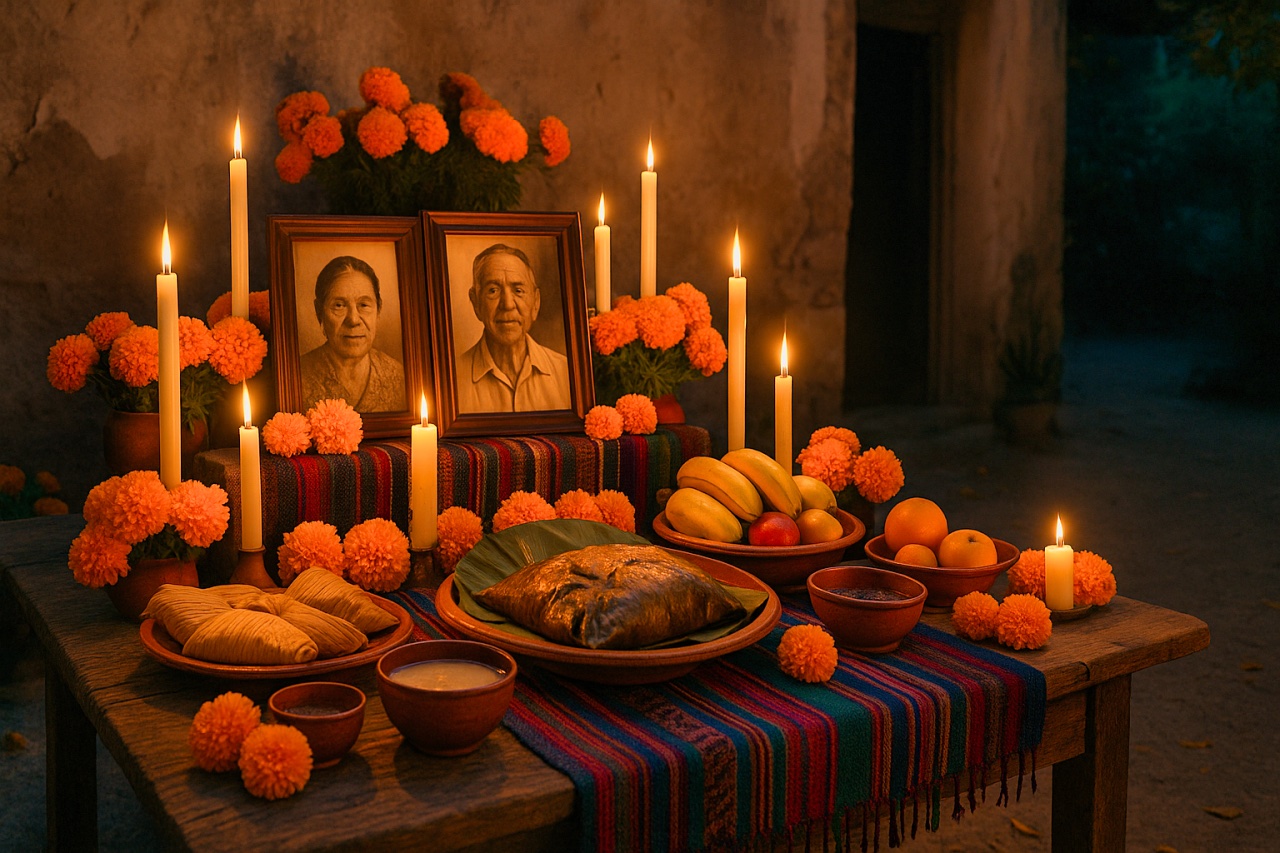
The heart of the celebration is the altar, or ofrenda. It may be arranged inside a home, in a patio or near a family grave, with food and personal touches chosen for those being remembered.
A traditional Maya altar can begin with a simple table covered by a cloth. White is commonly used for adults, while children’s altars may have brighter colors, sweets and toys.
Flowers, candles, incense and photographs help create a welcoming space. Water and salt are also traditional elements, and a green cross can represent the ceiba, the sacred tree of life.
The offerings are what make each altar personal. A favorite dish, a familiar drink or a small reminder of someone’s life turns the display into a tribute to a particular person.
You may also see sugar skulls and pan de muerto. These have been adopted into some regional celebrations from central Mexican traditions, rather than being defining elements of the older Maya observance.
The Feast for the Souls: Pib
One of the best-known seasonal dishes is mukbilpollo, also called mucbipollo or simply pib. This large, savory tamal is made with corn masa, usually filled with chicken and pork, wrapped in banana leaves and traditionally cooked in an underground oven.
Other offerings can include atole, hot chocolate, seasonal fruit, traditional sweets and xec, a mixture of jícama and citrus with chili. The dishes and preparations vary, with family recipes helping carry the tradition from one generation to the next.
The meal is part of the remembrance, not just something served alongside it. Preparing a loved one’s favorite food is a practical, heartfelt way of keeping that person present in family life.
Three Days of Remembrance
The main observance runs from October 31 through November 2. Each day has a particular focus, although families and communities may follow additional customs before or after these dates.
October 31: Children who have died are remembered, often with colorful altars, toys and sweet treats. This day is known as u janal palal.
November 1: The focus turns to adults who have died, with offerings prepared in their memory. It is known as u janal nucuch uinicoob.
November 2: All departed souls are remembered. Known as u janal pixanoob or, in some places, misa pixán, the day may include prayers and a Mass at the cemetery.
Experiencing Janal Pixán in Puerto Morelos
Public exhibitions and festivities give visitors a way to appreciate the creativity surrounding the season. Behind those celebrations, though, are personal acts of remembrance taking place in homes and families.
If you visit an altar, take a moment to notice the food, photographs and details chosen for the person being honored. Ask before photographing a private altar or a family’s observance, and remember that offerings are there for a reason.
For this year’s local festivities, see our coverage of Puerto Morelos’ Mar de Almas Janal Pixán celebration. The festival is an invitation to enjoy the town’s public celebrations, while the tradition itself offers a closer look at how families remember those they love.
Sources: Yucatán Tourism and the Government of Yucatán. |