
Pozole: The Maize Bowl That Makes September Taste Like Mexico |
From kernels that “flower” in the pot to red, green, white, and a cold Yucatecan drink, pozole is a living family of maize traditions, not one fixed recipe. |
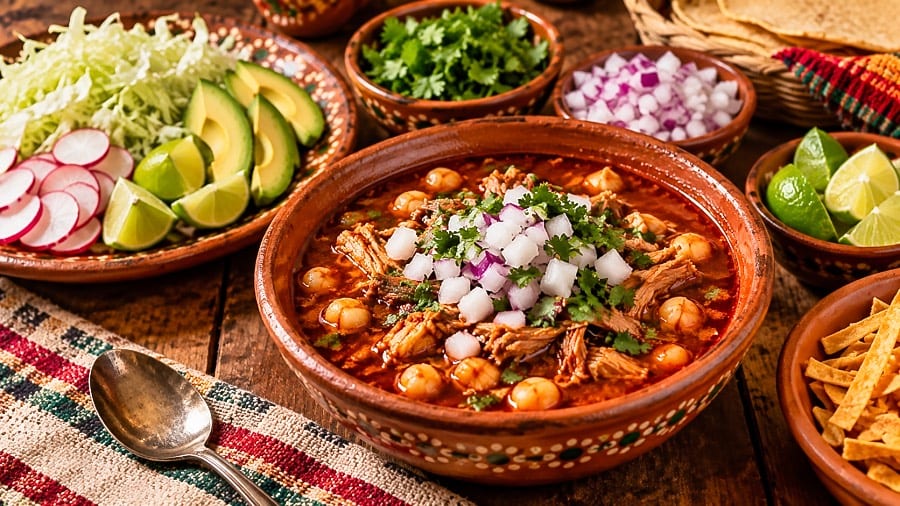
September in Mexico has the smell of chiles toasting, lime being cut, and big pots of pozole coming to a boil.
It is the month of Independence celebrations, but it also follows the growing calendar of cacahuazintle, the large, floury maize that gives the best-known pozoles their distinctive texture.
In the Valle de Toluca, growers cited by Mexico’s Agriculture Ministry sow this maize from mid-March to mid-April and harvest it at the beginning of September or just before it.
The grain itself offers a fitting opening to the story.
As cacahuazintle cooks, its kernels soften and split open like small flowers.
They release foam into the broth, a quality associated with the Nahuatl name pozolli, often translated as “foamy.”
In a country of many regional cuisines, that single word does not point to one immutable dish.
It names a broad family of maize preparations shaped by local ingredients, histories, and hands.
The grain at the center
Before pozole is red, green, or white, it is maize.
Cacahuazintle is prized for its large kernel, soft texture, and floury consistency.
Its ability to open in the pot makes it especially suited to pozole, although it also appears in foods such as pinole, atole, and other regional preparations.
That grain carries a much larger history.
Maize was domesticated from teosinte in Mesoamerica roughly 9,000 to 10,000 years ago, and it remains central to Mexican food, agriculture, and cultural identity.
The familiar process of nixtamalization, treating maize with an alkaline solution before cooking, also belongs to this long maize tradition.
Pozole is not a time capsule, but its base connects present-day kitchens to food knowledge developed over many generations.
White, red, and green: a useful field guide
The three best-known styles of pozole are easy to recognize, even though every region and household has its own approach.
White pozole is the uncolored base, a broth without red or green sauce.
It is often prepared with pork and finished at the table with lime, onion, radish, lettuce or cabbage, oregano, ground chile, and tostadas.
Red pozole gets its deep color from dried chiles, especially ancho and guajillo.
It is famously associated with Jalisco, though it is made well beyond that state.
Green pozole, strongly associated with Guerrero, often takes its flavor and color from tomatillo, pumpkin seed, green chile, and herbs such as epazote.
Avocado and chicharrón are common companions.
Those descriptions are a guide, not a set of borders.
Mexico’s cultural food record includes seafood pozoles along the Pacific coast, pozoles made with fresh corn or wheat, and countless local variations in meat, chiles, and garnish.
The point is not to decide which bowl is the most authentic.
The point is to notice how much regional knowledge can live under one name.
A history with more than one layer
Pozole’s history is sometimes reduced to a dramatic origin story, but the fuller picture is more interesting.
Its maize base and the techniques surrounding it have pre-Hispanic roots.
The pork common in many contemporary versions arrived through colonial exchange.
Mexico’s consumer-protection agency describes the dish as a product of mestizaje, while also noting that there is no conclusive evidence for one single place of origin.
The often-repeated claim that ancient pozole was made with human flesh deserves particular care.
Mexico’s Agriculture Ministry recounts post-Conquest friar accounts that made that association, but it also records another version involving xoloitzcuintle.
The source does not resolve the question.
For a modern food story, it is more accurate to say that some colonial accounts and later retellings linked maize preparations to sacrifice, rather than present the claim as settled fact.
What is certain is the foundational role of maize in Mesoamerica.
It was food, agricultural knowledge, and a source of cultural meaning.
The present-day September bowl is therefore best understood as a living tradition, connected to deep maize histories, changed by colonial ingredients, and continually remade by regional cooks.
Why September tastes like pozole
September’s association with pozole is both seasonal and civic.
The cacahuazintle harvest described by growers in the Valle de Toluca arrives at the beginning of the month, while the night of September 15 brings families and communities together for the Grito de Independencia.
Profeco describes pozole as the most popular traditional dish for that dinner.
Later in the month, September 29 is observed as Mexico’s National Maize Day.
The date recognizes maize as sustenance, symbol, and living heritage, from ancient Mesoamerican societies to today’s many regional kitchens.
These occasions do not prove that contemporary patriotic dinners are unchanged pre-Hispanic harvest rituals.
They do show why the food feels so right in September: the agricultural season, national celebrations, and the cultural importance of maize converge.
In the Yucatán Peninsula, pozole can be a cold drink
For readers who picture a steaming pork broth, the Yucatán Peninsula offers a welcome correction.
In Yucatán, pozole is also a cold drink.
Mexico’s Sistema de Información Cultural describes it as masa de maíz mixed with water and sold in markets with ice and lime.
The drinker may choose to add sugar or salt.
This is not a lesser cousin of the soup, it is a different regional expression of the same maize-centered idea.
In much of central and western Mexico, the word brings to mind cacahuazintle, broth, meat, and a table full of garnishes.
In Yucatán, it can mean a refreshing drink designed for the heat.
Quintana Roo adds another important thread.
An INAH study of Maya cuisine in the state lists pozole (k’eyem) among maize beverages, along with pinole and atoles.
The study places these drinks within a wider Maya food repertoire in which maize appears in everyday, sacred, and festive settings.
One name, many pozoles
The beauty of pozole is not that it has remained unchanged.
It is that maize has been able to travel through time and place without losing its importance.
In one kitchen, it becomes a white bowl brightened with lime and radish.
In another, it turns red with dried chile or green with tomatillo and pumpkin seed.
On the Peninsula, it may arrive cold in a glass, with ice and lime.
That is why pozole belongs to September so naturally.
It is a dish, and sometimes a drink, that makes the long, local life of maize visible.
Where to get pozole in Puerto Morelos
For a seafood version, ask Perla Negra about its off-menu seafood pozole special, which appears a couple of times a month.
DON Pozole offers delivery of white and red pozole on weekends.
Tulipán has from time to time featured fresh pork pozole as a limited lunch special, so its social pages are worth watching.
As always with specials, check ahead of time before making the trip. |