Winter Turns the Yucatán Coast Pink as Thousands of Caribbean Flamingos Return to Celestún |
Following a standout nesting season that welcomed nearly 8,000 chicks, the peninsula’s coastal wetlands are thriving... creating the perfect opportunity for an unforgettable seasonal road trip. |
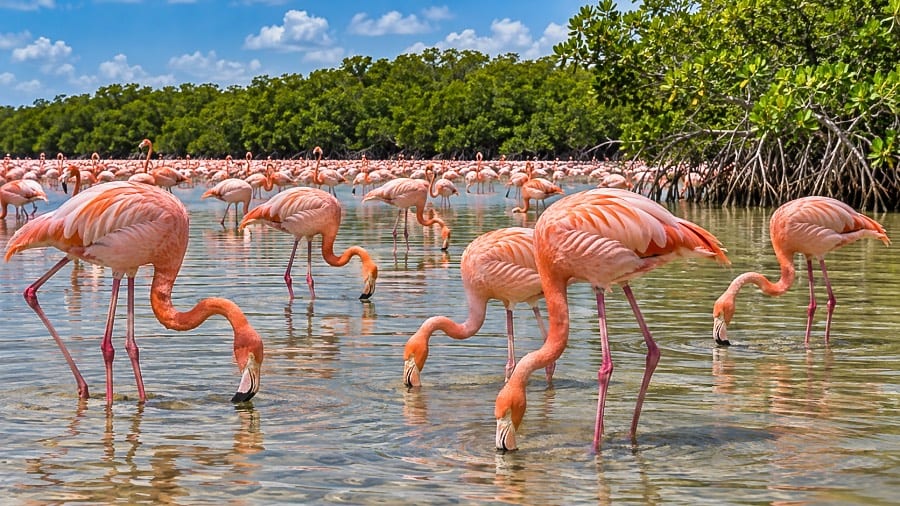
Winter has arrived, and thousands of bright pink flamingos are once again gathering along the Yucatán coast.
The winter period when Caribbean flamingos commonly gather in and around Ría Celestún generally runs from about November through March, although timing varies with weather, water levels, and food availability.
The Great Peninsula Migration
Every year from November through March, Caribbean flamingos flock to the shallow lagoons and mangroves of western Yucatán.
These peaceful wetlands offer plenty of food and quiet waters during the cooler months.
Flamingos move roughly 200–300 kilometers between western feeding areas and eastern breeding grounds, including Ría Lagartos.
They typically breed in the east during spring and summer before returning west later in the year, with timing influenced by local conditions.
The Ría Celestún Biosphere Reserve spans approximately 132,523 hectares in western Yucatán and forms part of a broader wetland corridor.
Ría Celestún is recognized as both a Ramsar wetland and a UNESCO Biosphere Reserve.
Its shallow wetlands provide algae and aquatic invertebrates containing carotenoid pigments that contribute to the flamingos’ pink coloration.
A Strong Year for Flamingo Chicks
Recent conservation reports bring encouraging news for the peninsular flamingo population.
A 2026 report described roughly 24,000 flamingos in the nesting area, 12,500 nests, and a hatching rate of about 63.84%, resulting in approximately 7,980 chicks.
Federal monitoring teams recorded a hatching rate near 64 percent, welcoming about 7,980 new chicks.
Conservation teams have used banding and other monitoring methods in the region to study flamingo movements, but the number of chicks banded during the 2026 season should be specified only with a source.
A Classic Road Trip from Puerto Morelos
For residents in Puerto Morelos, this winter arrival makes Celestún a top destination for a weekend getaway.
Celestún lies west of Mérida and is reachable by road from Puerto Morelos, although the trip commonly takes several hours depending on traffic and route conditions.
Visitors can book licensed local boat tours through the reserve’s waterways.
Operators are expected to follow conservation rules, including maintaining appropriate distances from wildlife; visitors should confirm current requirements with local authorities or authorized guides.
This seasonal movement also reminds Quintana Roo locals how connected the peninsula's coastal wetlands are.
Flamingos also use other northern Yucatán and Quintana Roo wetlands, with their locations changing according to water levels, food availability, and season.
Planning Your Winter Visit
Morning boat trips often provide the calmest waters and the best bird sightings.
Sightings can change with water levels, so checking local weather before leaving Puerto Morelos is always smart.
November through March is generally a good period to look for large concentrations around Celestún, but sightings vary with weather, water conditions, food availability, and the birds’ movements.
A simple drive across the peninsula rewards travelers with one of Mexico's greatest wildlife treasures. |