
31 New Surveillance Cameras Now Watch Over the Ruta de los Cenotes |
Puerto Morelos activates 31 new surveillance cameras along the Ruta de los Cenotes to enhance security and emergency response for tourists and locals. |
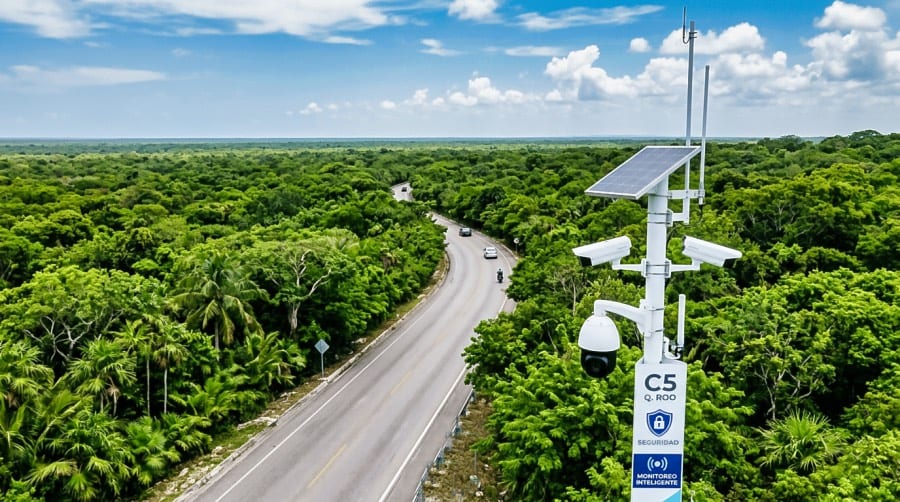
The road heading inland from Puerto Morelos just got a lot harder to disappear on.
The municipality has activated 31 new surveillance cameras along Central Vallarta and the Ruta de los Cenotes, bringing the total municipal camera network to 147 units spread across 30 monitoring points.
What Was Installed and Where
Mayor Blanca Merari Tziu Muñoz led the activation ceremony, which added six new Smart Monitoring Points, known locally as PMI (Puntos de Monitoreo Inteligente).
Each location is now equipped with high-definition fixed cameras, a PTZ camera with full 360-degree movement and zoom, license plate readers, and a signal repeater to keep the feed running without interruption.
The six new locations are:
All six points feed directly into the Municipal Command and Control Center, or C2, where staff monitor the feeds around the clock.
Why the Ruta de los Cenotes
The Ruta de los Cenotes is a jungle corridor that runs west from Puerto Morelos toward Leona Vicario, sources place its length at roughly 30 to 40 kilometers depending on how it is measured.
It is home to more than 60 cenotes and has become one of the fastest-growing tourism corridors in Quintana Roo, drawing visitors year-round, especially when sargassum pushes people away from the beaches.
With that growth has come more commercial activity, more traffic, and more people moving through an area that the municipality identified as needing expanded camera coverage. The new cameras extend that coverage significantly.
How It Was Paid For
The investment totals more than 5.3 million pesos and was funded through the Fideicomiso de Derecho de Saneamiento Ambiental, an environmental trust fund fed largely by fees collected from the hotel and tourism sector.
In a May 2026 committee session, the fund reported collecting more than 40 million pesos during the first four months of the year, supporting projects across the municipality.
The fund is a dedicated revenue stream that the tourism industry itself contributes to, and it is being used here to protect the very corridor that drives much of that tourism.
What the Full Network Looks Like Now
The 147-camera network is now distributed across three zones: 100 cameras cover the municipal seat and hotel zone along the coast, 16 cameras are in Leona Vicario, and the 31 new cameras cover the Ruta de los Cenotes and Central Vallarta.
Municipal Security Secretary Manuel Alejandro Nava García confirmed that the new points allow staff at the C2 to respond faster to citizen reports and improve monitoring along the corridor.
Mayor Tziu Muñoz added that the municipality plans to keep expanding the network into more communities.
What This Means for Residents and Visitors
If you drive the Ruta de los Cenotes, visit Selvática, or pass through Central Vallarta, you are likely now within range of a camera.
Faster emergency response, better documentation of accidents and incidents, and a stronger deterrent for crime are all potential benefits of a working camera network.
The expansion shows the municipality is treating the inland corridor as seriously as it treats the beach zone, and that is long overdue. |