
More Than a Topping... An Explorer's Guide to Authentic Mexican Cheese |
From the fresh and crumbly to the perfectly melted, explore the cheeses of Mexico and discover a unique Yucatecan tradition you won't expect. |
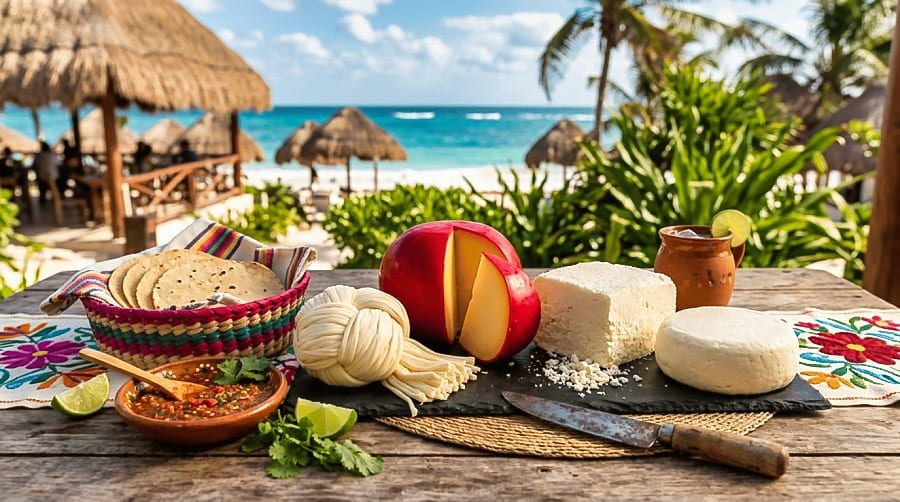
Exploring the World of Mexican Cheeses
When you think of Mexican food, you might picture tacos and enchiladas. But what about the cheese on top? Mexico has a rich world of cheese that goes far beyond the shredded yellow blends you see in other countries.
Spanish settlers introduced cattle, sheep, and goats to Mexico in the sixteenth century, helping establish dairy production and cheesemaking traditions that later developed differently across the country.
10 Cheeses to Know and Try in Mexico
Here are ten cheeses worth getting to know, from everyday Mexican favorites to the imported cheese that became a Yucatecan staple. Think of this as a tasting shortlist rather than a sales ranking; styles and flavors vary by producer.
1. Queso fresco: Fresh, white and crumbly, with a mild, milky flavor. Crumble it over beans, tacos or enchiladas when you want a gentle finishing touch.
2. Panela: A fresh, mild cheese with a firmer texture than queso fresco. Slice it for salads and sandwiches, or try it grilled, where it softens while generally keeping its shape.
3. Oaxaca (quesillo): This mild cheese is stretched into long ribbons and commonly rolled into a ball. Pull it apart for snacking or melt it into quesadillas for those lovely stretchy strands.
4. Mexican Manchego: Usually made from cow's milk, Mexican Manchego is mild, creamy and a dependable melting cheese for sandwiches, quesadillas and baked dishes. It differs from Spain's protected Manchego, which is made from the milk of Manchega sheep.
5. Chihuahua (queso menonita): A semi-firm cow's-milk cheese associated with Chihuahua's Mennonite cheesemaking tradition. Its mellow, buttery flavor and good melting qualities make it a favorite for queso fundido.
6. Cotija: A salty cheese named for Cotija in Michoacán, sold in fresher and aged styles. The aged version is firm and crumbly, ideal for sprinkling over esquites, beans and enchiladas.
7. Asadero: A mild, supple melting cheese with a smooth texture. Try it in quesadillas, stuffed chiles or a pan of queso fundido.
8. Queso añejo: Añejo means aged, and these cheeses develop a firmer texture and stronger flavor as they mature. Grate or crumble a little over tacos, beans and other dishes that need a savory finish.
9. Requesón: A soft, moist whey cheese with a mild flavor, often compared with ricotta. It works well in stuffed tortillas and pastries, or simply spread on bread.
10. Queso de bola: The red-waxed Edam-style cheese beloved in the Yucatán Peninsula has Dutch origins, but a firmly established place in local cooking. Its salty, nutty flavor shines in queso relleno and the sweet-and-savory contrast of a marquesita.
A Taste of the Yucatan
The Yucatan Peninsula has a special connection to a cheese you might not expect. Queso de bola is a Yucatecan term for the imported Edam-style cheese traditionally sold as a red-waxed ball. It became established in the peninsula during the nineteenth century through maritime and regional trade, although accounts differ about its exact route of arrival.
You can taste this local history in two very popular treats. Queso relleno is a Yucatecan dish made by hollowing out a ball of Edam-style queso de bola, filling it with seasoned pork picadillo, and steaming or braising it. It is traditionally served with k’ool and tomato sauce, and the filling may include ingredients such as olives, capers, and raisins.
Marquesitas are a Yucatecan street dessert made from a crisp wafer-like batter, traditionally filled with shredded queso de bola and often paired with a sweet topping such as Nutella or cajeta. They are commonly sold by street vendors in the Yucatán Peninsula; availability in Puerto Morelos can vary by location and date.
Time to Explore
Next time you are at the market, don't just grab the usual. Try a slice of panela with fruit, or ask a street vendor for a marquesita with extra queso de bola. Exploring the world of Mexican cheese is a delicious way to connect with the culture and history of the region. |