From Scourge of the Sea to Building Blocks of the Future |
A new wave of innovation is turning the problematic sargassum seaweed washing up on beaches into a key ingredient for sustainable construction materials, offering a surprising solution to a massive environmental challenge. |
A New Use for Sargassum: Turning Seaweed Into Cement
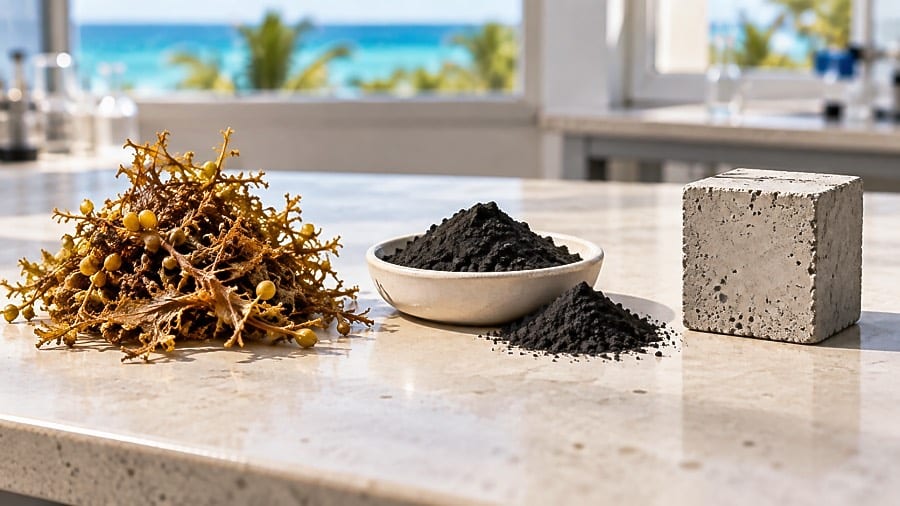
That brown seaweed washing up on our beautiful beaches, sargassum, might soon be part of our buildings. RubisCO2 is developing a sargassum-derived biochar and pozzolanic material that could replace a portion of the cement used in construction.
This could be a big deal for places like Puerto Morelos that deal with tons of sargassum every year.
From Beach Nuisance to Building Material
A company called RubisCO2 has found a way to turn sargassum into a useful product. RubisCO2 has developed a pilot operation in Playa del Carmen and has processed approximately 50 tons of sargassum during its trials.
RubisCO2 uses a thermochemical process to convert sargassum into biochar and a pozzolanic material. The company is developing the material as a partial replacement for cement, although claims about its strength should be attributed to specific laboratory or construction tests.
RubisCO2 says the process may offer energy and emissions advantages, but its cost competitiveness with conventional cement has not been independently demonstrated in the information available.
Big Plans for the Future
RubisCO2 is preparing an industrial facility intended to receive about 60 tons of sargassum per day. Public reporting does not consistently confirm the plant’s final location, construction cost, or expected output.
Pablo Navarro Maldonado has said that replacing a small share of Mexico’s cement demand could consume substantial amounts of beach-cast sargassum. That projection requires independent verification, particularly because the material is currently described as a partial cement replacement.
Cemex has supported testing of the algae-based material. A later report also describes a 50,000-ton order associated with RubisCO2, but the nature and status of that order should be independently confirmed before being presented as a completed Cemex purchase.
What This Means for Puerto Morelos
This new technology could have a positive impact right here in Puerto Morelos. Puerto Morelos is among the destinations included in Mexico’s federal sargassum strategy, which provides more than 2.6 billion pesos through 2027 for harvesting vessels, containment barriers, and processing infrastructure across several coastal areas.
Other local businesses are also finding new uses for sargassum. One company near Puerto Morelos is turning it into fertilizer.
Entrepreneur Omar Vázquez Sánchez developed Sargablock, a construction block reported to contain 40% raw sargassum and 60% adobe clay, combined with organic binders.
These businesses could create local economic opportunities and help manage beach-cast sargassum, provided the material is collected and processed safely and at sufficient scale. It changes the sargassum problem into an opportunity for our community. |