
Taxi Meters Are Finally Coming |
After years of complaints about taxi fares, digital meters could begin appearing as early as March 2027. |
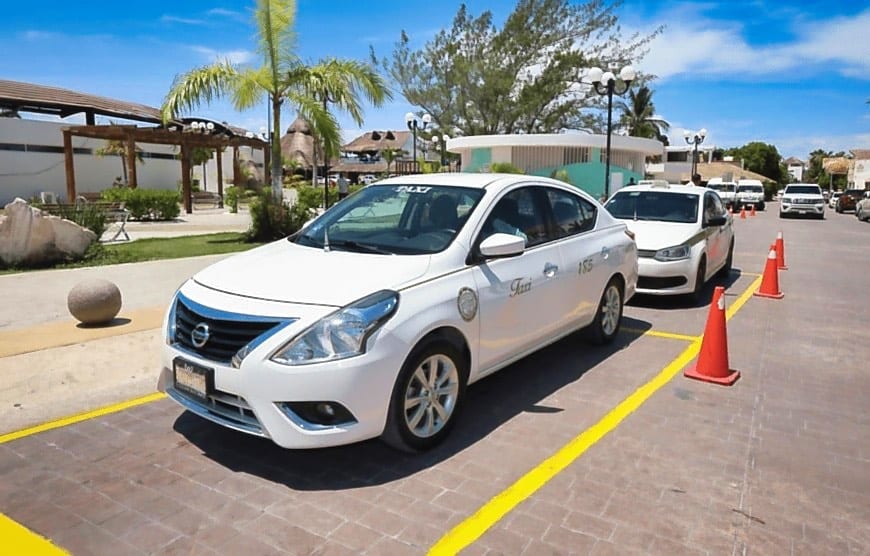
Ask five people in Puerto Morelos what a taxi from the square to the Colonia should cost and you'll get five different answers. Ask five drivers and you'll get five more.
I've taken the exact same ride, same corner, same destination, same time of day, and paid noticeably different prices depending on who was behind the wheel. Sometimes nearly double.
So this is news worth getting a little excited about.
What Actually Changed
On October 30, the state published new rules in the Periódico Oficial that make digital taximeters mandatory for taxis across Quintana Roo. Not a pilot program. Not a suggestion. A rule, issued by the Instituto de Movilidad del Estado de Quintana Roo (IMOVEQROO).
It applies to taxis de sitio, ruleteros, and ruleteros económicos. Collective taxis, the fixed-route vans, are exempt, since they already run on set routes and set prices.
The devices have to calculate your fare the way meters work everywhere else in the world: an initial flag-drop charge, plus distance traveled, plus time in the vehicle.
What's Inside the Box
The state's specifications are surprisingly detailed. Each unit needs a touchscreen of at least five inches, bright enough to read in direct sunlight, with 4G, Wi-Fi, Bluetooth and GPS. Analog and electromechanical meters without satellite tracking are explicitly banned.
There's also a physical and digital panic button wired to the C5 state command center. Press it and the system sends your real-time location, the unit number, and the driver's concession details straight to security officials.
And then there's the part that matters most if you've ever been told the card machine is broken: every taxi must carry an electronic payment terminal accepting cash, chip cards, contactless taps and authorized digital wallets.
Drivers are prohibited from passing any bank commission on to you. If the cell signal drops, the meter stores the trip locally and, under the rules, cannot allow discretionary charges or fare changes.
March 2027... Maybe
Here's where the enthusiasm needs a small reality check.
In Cancún, pilot testing is already underway and the drivers' union is evaluating four different suppliers. Devices run roughly 1,500 to more than 3,000 pesos depending on features, and drivers themselves would likely foot the bill, though financing plans with monthly payments and advertising sponsorships are being explored.
The first phase would cover around 3,000 units, then expand to other taxi stands and the Hotel Zone.
In Playa del Carmen, municipal transport director Nayeli Molina says March 2027 is also the tentative target. But she's candid that the details aren't settled: IMOVEQROO's legal team and municipal authorities have held a first coordination meeting, and technical specs and oversight agreements are still being worked out.
The municipality doesn't yet have full technical information about how the equipment will actually function.
The real trigger is a fare agreement, an Acuerdo Tarifario, published for each municipality. Once that lands, concession holders get 90 calendar days to buy, install, verify and register their devices. Until then, the existing official fares remain in force.
What This Means for Puerto Morelos
No one has announced a date for Puerto Morelos yet. That's the honest answer.
What we do know: the rule is statewide, so local sitio and ruletero taxis fall under it, and the clock for us starts when IMOVEQROO publishes a fare agreement for this municipality. Playa del Carmen's experience suggests that's a process measured in months, not weeks.
In the meantime, the old system stays. And Puerto Morelos does have an official rate sheet, the community-maintained list puts a ride from the square to Chedraui or the Colonia at around 50 pesos, with longer runs like the Maya Train station or the airport priced considerably higher.
The Teeth
One reason to think this one might stick: the penalties. A driver caught running with an altered, switched-off or broken meter faces fines, having the vehicle sent to the corralón, cancellation of their driver's license, or revocation of the concession entirely.
There's also a verification regime, an initial inspection, extraordinary inspections, and an annual check, plus a registry of approved suppliers who must provide a 24-month written warranty and fix reported faults within 48 hours.
Until Then
For the next year or so, the practical advice hasn't changed: confirm the price before you get in, ask to see the rate card if a number sounds invented, and don't be shy about it. If you're ordering by phone, WhatsApp or app, expect a small surcharge, the local rate list notes an extra 10 to 15 pesos for dispatch service.
But for the first time in a long while, there's something better than advice on the horizon. There's a rulebook, a rough date, and a real penalty for ignoring both.
A meter doesn't care who you are, what you're wearing, or how much luggage you have. It just counts. After years of "how much to the beach?" being a question with no correct answer, that sounds pretty good. |