Mexico's Navy Is Sending Backup, and Puerto Morelos Is at the Center of It |
A record sargassum season is bringing more ships, longer barriers, and a bigger offshore cleanup effort centered on Puerto Morelos. |
Quintana Roo is experiencing one of its heaviest sargassum seasons on record, prompting a major government response.
The Mexican Navy announced it will expand its sargassum cleanup fleet in the Mexican Caribbean, with Puerto Morelos serving as the home base for the operation's biggest ships.
A Record Year Demands a Record Response
The 2026 sargassum response is one of the largest efforts yet, with Mexican Navy collection vessels, offshore barriers, and thousands of municipal and hotel cleanup crews working along the coast.
By early to mid-August, officials reported that Quintana Roo had cleared more than 100,000 metric tons of sargassum, surpassing last year's record total before the season was over.
What the New Fleet Looks Like
The 2026 response includes a mix of coastal harvesters, support boats, barriers, and larger vessels, though publicly reported fleet counts differ by source and phase.
The government says the sargassum response will expand in phases through 2027. The first stage is aimed at increasing daily collection capacity, while the second stage is expected to push the system toward a much larger long-term target.
The Big Ship Is Almost Here
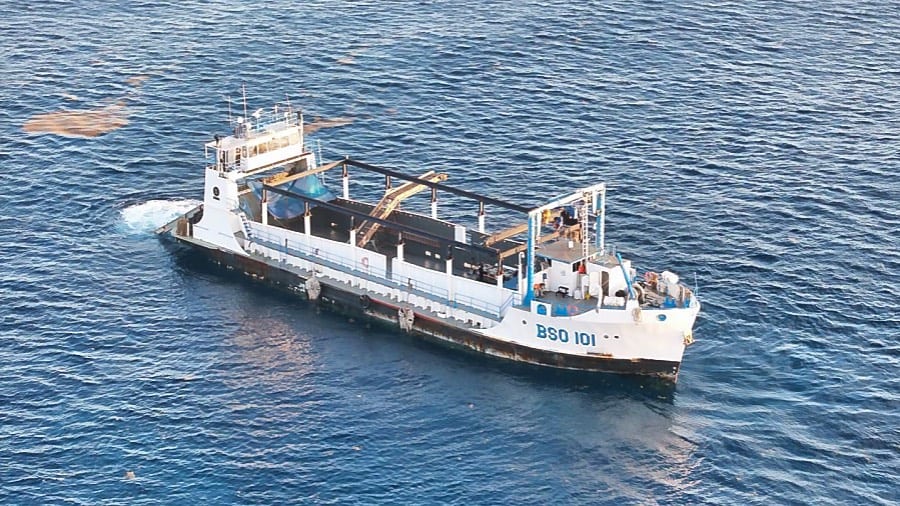
The best-known vessel in the Puerto Morelos effort is the Natans, which has been deployed here to intercept sargassum offshore. The new ship, Sargassum, is designed for high-capacity collection and is expected to work alongside the existing fleet once it is operational.
Officials have said the first phase of the expansion could lift daily collection capacity from hundreds of tons per day to more than 1,800 tons per day. The Natans, which currently handles around 250 tons per day, will continue working as part of the response.
Puerto Morelos Is the Hub
Both the Sargassum and the Natans are expected to be based at Puerto Morelos, though they can move to other stretches of coastline as needed. The Navy is currently supporting Puerto Morelos with the Natans, three pontoon boats that clean the barrier, and 52 Navy personnel assisting with removal on the beaches.
Puerto Morelos has also been part of the wider conversation about circular-economy uses for sargassum. Authorities have discussed processing the seaweed for possible uses such as fertilizer, fuel, and construction materials, but specific local infrastructure plans should be watched as they develop.
What This Means for Residents and Visitors
The Navy's strategy focuses on intercepting sargassum offshore before it reaches the beach. That approach can make a visible difference when conditions cooperate, especially in places like Puerto Morelos where barriers, boats, local crews, and the offshore reef all play a role.
The government's next phase aims to expand daily collection capacity, add more vessels, and strengthen containment infrastructure. For Puerto Morelos, where tourism and beach conditions matter economically, that investment is highly relevant.
The fight against sargassum is not going away, but neither is the effort to manage it. For now, Puerto Morelos remains one of the most important points in Mexico's growing sargassum response.
|