Sargazo Season Returns: |
Beyond Beach Cleanup: The Environmental, Health and Community Impact of This Year's Expected Sargassum Influx |
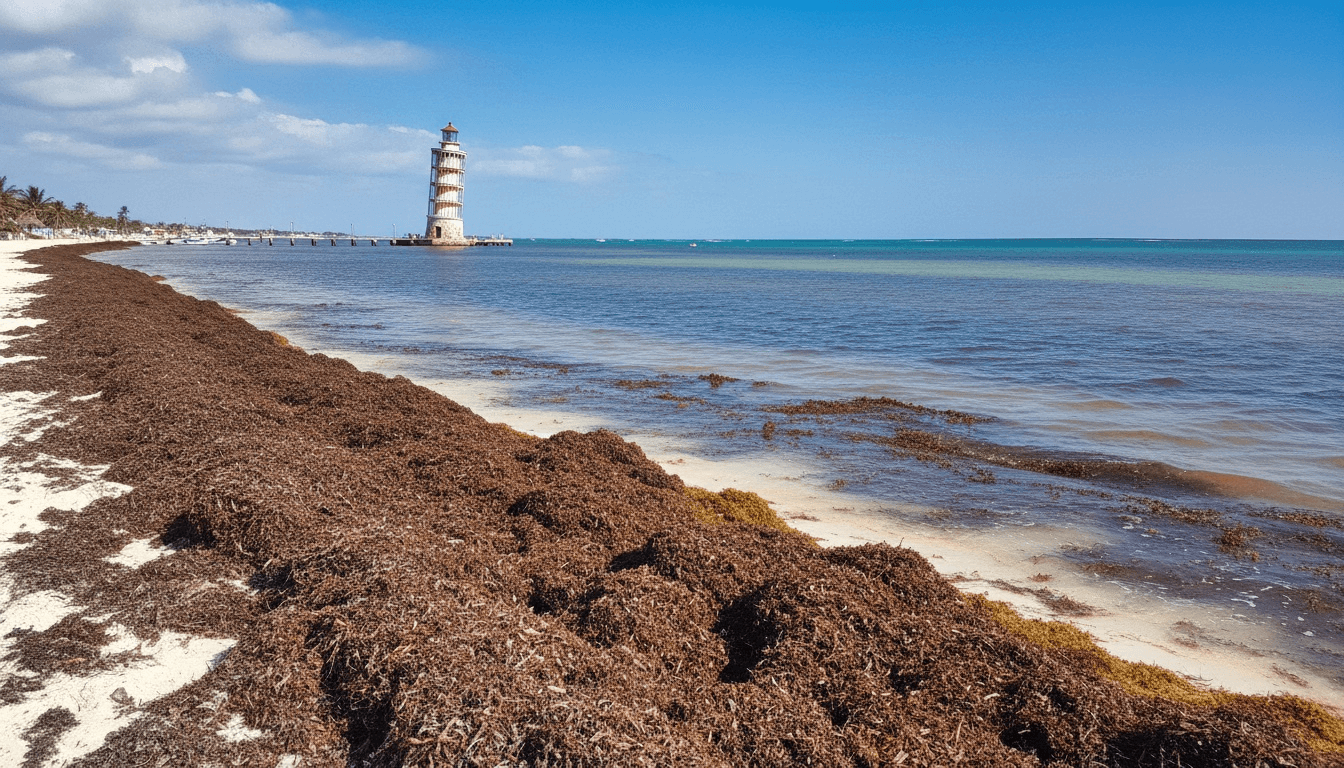
The shores of Puerto Morelos are once again preparing for the annual arrival of sargazo (sargassum) seaweed.
According to recent reports, experts from the University of Florida and monitoring specialists anticipate a 2026 season similar to last year's influx along our Caribbean coastline.
Health Concerns Beyond Beach Aesthetics
Sargazo isn't just an eyesore on our beautiful beaches. UNAM researcher Rosa Elisa Rodríguez Martínez warns that decomposing seaweed releases hydrogen sulfide, a toxic compound that can contaminate both air and water.
This gas creates the characteristic rotten egg smell that sometimes permeates coastal areas when large amounts of sargazo accumulate. For residents with respiratory conditions, prolonged exposure could worsen symptoms.
Environmental Impact on Our Marine Ecosystem
Puerto Morelos is home to part of the Mesoamerican Reef, the second largest barrier reef system in the world. The sargazo influx threatens this delicate ecosystem.
As the seaweed decomposes, it can damage mangroves, seagrasses, and affect marine wildlife including our beloved sea turtles that nest on local beaches. The darkened water from decomposing sargazo reduces sunlight penetration, further stressing coral reef systems.
Collection Efforts and Disposal Challenges
While Puerto Morelos has implemented collection efforts along public beaches, details about the final destination and processing of collected sargazo are not extensively documented in public reports.
In 2025, Mexican authorities declared sargassum a national fishing resource, suggesting potential repurposing beyond traditional disposal.
Local environmental advocates have questioned whether proper containment infrastructure exists to prevent seepage of decomposing sargazo into our vulnerable subsoil and aquifer system.
What Residents Can Expect
Two main species arrive on our shores: Sargassum natans (with long stems and narrow leaves) and Sargassum fluitans (shorter stems, broader leaves). Both use air-filled vesicles to float and can accumulate in massive quantities.
Residents should expect increased collection activity on public beaches as the season progresses. The municipal crews typically prioritize tourist zones, so residents in less-visited areas might experience longer periods before cleanup occurs.
Community Response
Puerto Morelos has historically shown resilience in facing sargazo seasons. Local businesses, particularly those in the tourism sector, have developed strategies to minimize impact on visitors' experiences.
Community cleanup initiatives may form as the season progresses, offering residents opportunities to participate in preserving our coastal environment while authorities work to develop more permanent solutions to this recurring challenge. |