Mexico's Free Beach Access Law Passed Unanimously, But the Senate Has Stalled It for 7 Months |
What's happening in Tulum right now shows exactly what Puerto Morelos stands to lose if lawmakers don't act. |
A law that could protect your right to walk freely on any beach in Mexico has been sitting in the Senate, collecting dust, for seven months.
What the Law Would Do
Mexico's Chamber of Deputies approved a reform guaranteeing free, unrestricted access to beaches and protected natural areas.
The initiative secured unanimous voting, with 465 votes in favor and no opposition in the general vote, and 470 in favor with only one against in the specific vote.
The reform modifies provisions of the General Law of National Assets and establishes that no one, regardless of nationality or income, can be charged simply to reach the water's edge.
It would also require at least one free admission day per week to protected natural areas like national parks.
The bill would create a National Beach Registry, requiring municipalities to officially record and protect beach access points in their property registries.
That means access paths could not quietly disappear during land sales or boundary disputes.
So Why Is It Still Not a Law?
The bill was sent to the Senate, but its status remains unclear, with no recent updates on the official legislative portal.
What's Happening in Tulum Is a Warning
The delay has real consequences, and Tulum is showing exactly what happens when beach access goes unprotected.
Visitors now pay fees of around 250-400 pesos to access some formerly free beaches, sparking protests from residents and visitors alike.
The memes say it all. Spanish-language social media has exploded with jokes about the Tulum tourism collapse, and the numbers back them up. What was once Mexico's hottest destination is struggling.
Vacation rental occupancy in Tulum has declined amid tourism challenges, with reports showing rates below 50 percent in early 2026.
Why Puerto Morelos Should Pay Attention
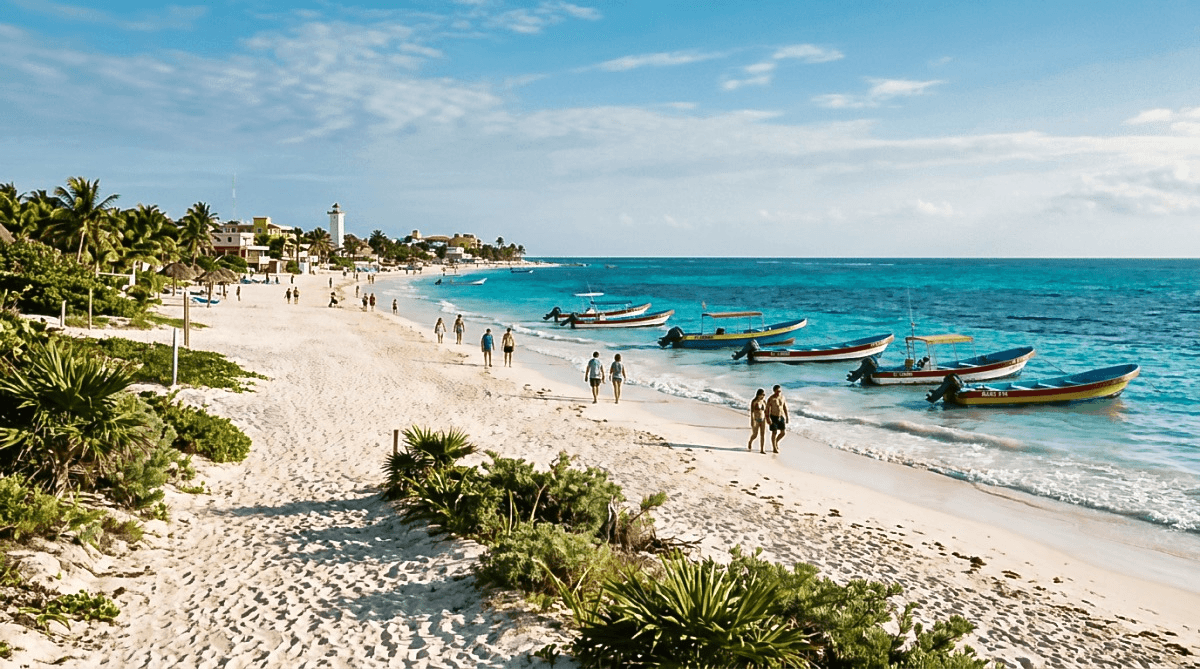
Puerto Morelos is not Tulum. The beaches here remain open, free, and easy to reach from the town center.
The local ZOFEMAT office has been actively maintaining access points and cleaning sargassum from the shoreline.
But the same legal gaps that allowed fees and barriers to creep into Tulum exist here too. The ZOFEMAT remains federal property, which means property owners cannot fence it off, privatize it, or deny public access where entry points have been designated.
This principle is backed by the Mexican Constitution: Article 27 declares beaches and the ZOFEMAT to be federal property for the benefit of everyone.
The problem is that the law as it stands lacks the teeth to stop slow, quiet erosion of access. The new reform would fix that, with clear penalties and a national registry to back it up. |